Mining (Proof of Work)
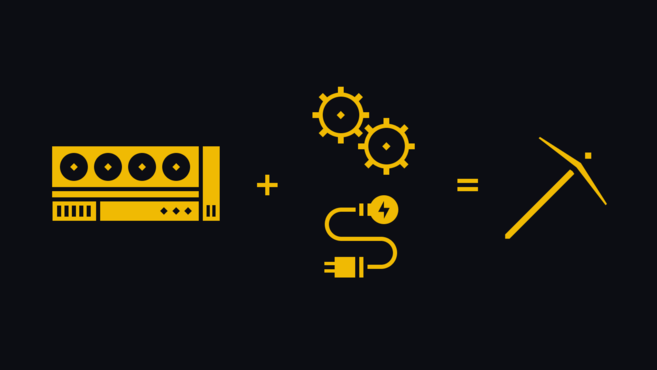
Mining is by far the most commonly-used consensus algorithm. In mining, a Proof of Work (PoW) algorithm is used. This involves users sacrificing computing power to try and solve a puzzle set out by the protocol.
The puzzle requires users to hash transactions and other information included in the block. But for the hash to be considered valid, it must fall below a certain number. Since there’s no way of predicting what a given output will be, miners have to keep hashing slightly modified data until they find a valid solution.
Evidently, repeatedly hashing data is computationally expensive. In Proof of Work blockchains, the “stake” that users put forward is the money invested in mining computers and the electricity used to power them. They do this in hopes of getting a block reward.
Remember how we said earlier that it’s practically impossible to reverse a hash, but it’s easy to check it? When a miner sends a new block to the rest of the network, all the other nodes use it as the input in a hash function. They simply need to run it once to verify that the block is valid under the rules of the blockchain. If it isn’t, the miner doesn’t receive the reward, and they’ll have wasted electricity for nothing.
The first Proof of Work blockchain was Bitcoin’s. Since its creation, many other blockchains have adopted the PoW mechanism.
He’ll give Alice the public address so that she knows where to send funds. She constructs a transaction that says pay these funds to this public address. Then, to prove to the network that she isn’t trying to spend funds that aren’t hers, she generates a digital signature using her own private key. Anyone can take Alice’s signed message and compare it with her public key, and say with certainty that she has the right to send those funds to Bob.
<< For more information on passive income opportunities, please ooxy.com, vulcanblockchain.com , SAFUUGO.


